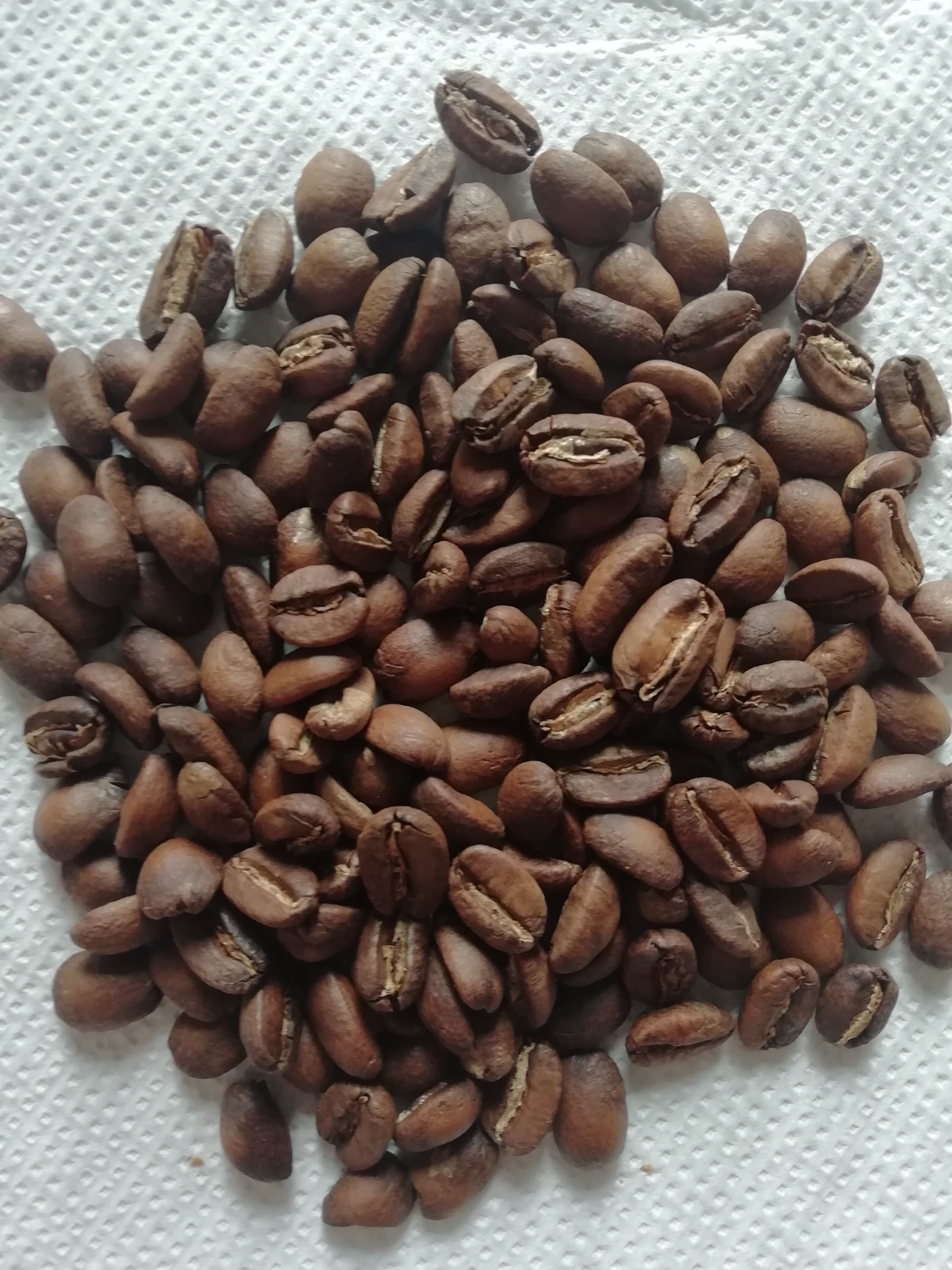
Struggling with Colombian Caturra (Natural) on Bullet R1 V2 – Uneven Roasts & Scorch Lines
Hey everyone,
I’m roasting a Colombian Caturra (natural process) on my Aillio Bullet R1 V2, and I’m consistently getting uneven roasts with black lines or scorching on some beans. It’s really frustrating — I’ve tried so many tweaks, and nothing seems to fix it. Honestly, I’m starting to lose motivation to roast because of this one coffee.
Here’s what I’ve tried:
• Fan speed: Tried both F2 and F5 at different phases, didn’t see improvement.
• Charge temp: Experimented between 200°C to 300°C, no significant difference.
• Batch size: Went down to 350g, thinking it might help airflow or heat transfer — no luck.
• Adjusted heat application more gently during drying and Maillard.
Despite all that, I still get inconsistent results. IBTS readings seem normal, but the beans tell a different story.
Is this just a tricky natural Caturra? Is there something I’m missing in terms of airflow, turning point strategy, or charge protocol?
I’m struggling with this even with different beans different origins
Any help, tips, or shared experiences would really mean a lot. Thanks!
Yes, there are tricky beans that the Bullet struggles with. The first thing I’d suggest is to use the trier early in the roast, by which I mean the first minute. Examine the beans carefully every 5 to 10 seconds. You will notice a change in colour if the beans are getting scorched. Some beans will take on too much heat which will be difficult to get rid of later in the roast. I will link one of my latest roasts which you shouldn’t copy, because your roasting environment is different, just to give you an idea of the approach that might work with this type of bean. And it’s not really the Caturra or whatever, it’s the processing that makes beans behave this way. You might think that you have a dense bean, grown at high altitude, but the processing will have altered its structure, and it might be, for lack of a better word, “porous”, take on more heat and break down easier than a really dense bean would. It’s not a rule, because some highly processed and fermented beans roast normally, but there are a lot that don’t. When you look at the profile, you’ll see the beans will not let the heat go easily. But if you go with a high fan setting, you’ll go on a rollercoaster where you must lower the power, but the fan is making that impossible because with a high setting you should have the power set high too to balance it out. What I’ve learned with beans that present these challenges is that the fan is not really helpful because it requires more heat, and the beans themselves have already stored too much. Clearly, I might be wrong, but the eye and taste test say different. Here’s a photo.
I would also suggest going a little bit faster in the beginning and backing off earlier. Say increments of 2 every 30 seconds, instead of 45, and start backing off 30-40 seconds earlier.
Hi @albulushi did you resolve this and manage to get a clean roast?
I am having similar issues. I have access to an R1 V2 at the roastery I work at. For the first month of roasting everything went really well. Now, all my roasts are scorched / faced with burnt notes. My profiles are pretty standard.
This profile looks great for a light roast, with low power after yellowing, but it tastes burnt.
This profile for a similar washed Ethiopia bean I did a month ago tasted excellent and it had higher power throughout the roast.
A month ago I took off the face place and cleaned the IBTS. Ever since then I have noticed the bean temp for FC has reduced for 350g roasts. It used to be around 180, and now is around 171-175. IBTS has slightly changed too, it used to be around 195-200, and now just sits around 195.
I paid more attention to the latest 350g roasts and noticed the beans don’t seem to be agitated properly when the drum speed is on D9. This is also the case for larger roasts - 500g and 700g. The bullet is now 7 years old, so I wonder if the drum pully wheel screw is loose? There is no slipping or stopping of the drum that I can hear or see. When I watch videos of other Aillio users their beans seem to be agitated very well in the roaster, moving in a circle. In my last roast it seemed that the beans didn’t really move much, but they still got thrown into the air so I could catch them in the tryer to watch the roast.
I have contacted Aillio support for help. Any help from other users would be much appreciated.
For a start, you could, if you already haven’t, put some food grade silicone grease on both ends of the shaft. You could also tilt the roaster forward, with the faceplate removed, moving the shaft with your other hand, to see if there’s something stuck inbetween. And finally, you could try blowing air from the back to remove the accumulated dirt under the drum. Read here.
Before tightening the screw, check if the pulley is pushed as far as it will go against the back of the roaster. For the rest, wait for support and they’ll surely help you much more, as this is all I can think of at the moment.
Hi @braca19452f9m thanks so much for the suggestions and links. It has reminded me that after I cleaned the IBTS I had the same issue - green beans spilled into the cooling tray on the first roast. I thought it was weird when the door handle is heavy and keeps it shut, but foolishly didn’t think it was a sign something was wrong.
Grease - can this be applied to the back of the shaft without taking out the drum?
Pully - do you mean it needs to be pushed as close to the drum, or back towards the chaff collector?
Blowing air from the back - what do you use? Would a small gardening blower be too powerful?
Support initially told me I had too much heat in the Maillard / FC stage of my roasts, but when you look at my profiles they use similar heat application to Aillio recipes. Plus I have a friend who roasts faster and hotter than me with 250g batches who achieves amazing results. I’ll take a video of the beans in the front after cleaning, as it seems very likely to me they aren’t being agitated properly.
Yes, if you use a cotton swab or anything small enough to go through, but not small enough that you lose it in the process.
As close to the drum.
Even a hair dryer is too powerful. I use that, but on the lowest setting and with cold air. I also blow from a bit of a distance. Not much, just don’t press it against the roaster.
P. S. This seems less important for the current situation, but it is important in the long run.