Hi All
I have access to an R1 V2 at the roastery I work at. Its approx. 7 years old now and I am not sure how much use its seen. For the first month my roasts were great. I roast light for filter. However, since I cleaned the IBTS, many of my roasts now taste burnt. My profiles are pretty standard - 7 to 9 minutes to FC and around 1min development targeting 11-13% ML.
@braca19452f9m and I were discussing this in a different post. Here is some information in regards to the trouble shooting I have done:
- I sometimes get the low voltage error code ErC 256 depending which powerpoint I use at the roastery. During the roast I have linked below, the power cut out twice until the code cleared. In future I will only use the power outlet that I know continuously provides the correct voltage.
- I do not have an exhaust fan set up. I roast in a ventilated warehouse near a roller door. This seemed to have no impact on my successful earlier roasts.
- The bullet is clean: chaff collector, filter basket and IBTS. Airflow is clear. IBTS readings are normal. I took the drum out and vacuumed out all the burnt debris between the drum and insultation.
- The beans seem to be agitated well on D9 for a 350g roast.
- The drum pully is pushed as close to the drum as possible.
- The Bullet is level.
Latest roast - Ethiopia Yirg 350g
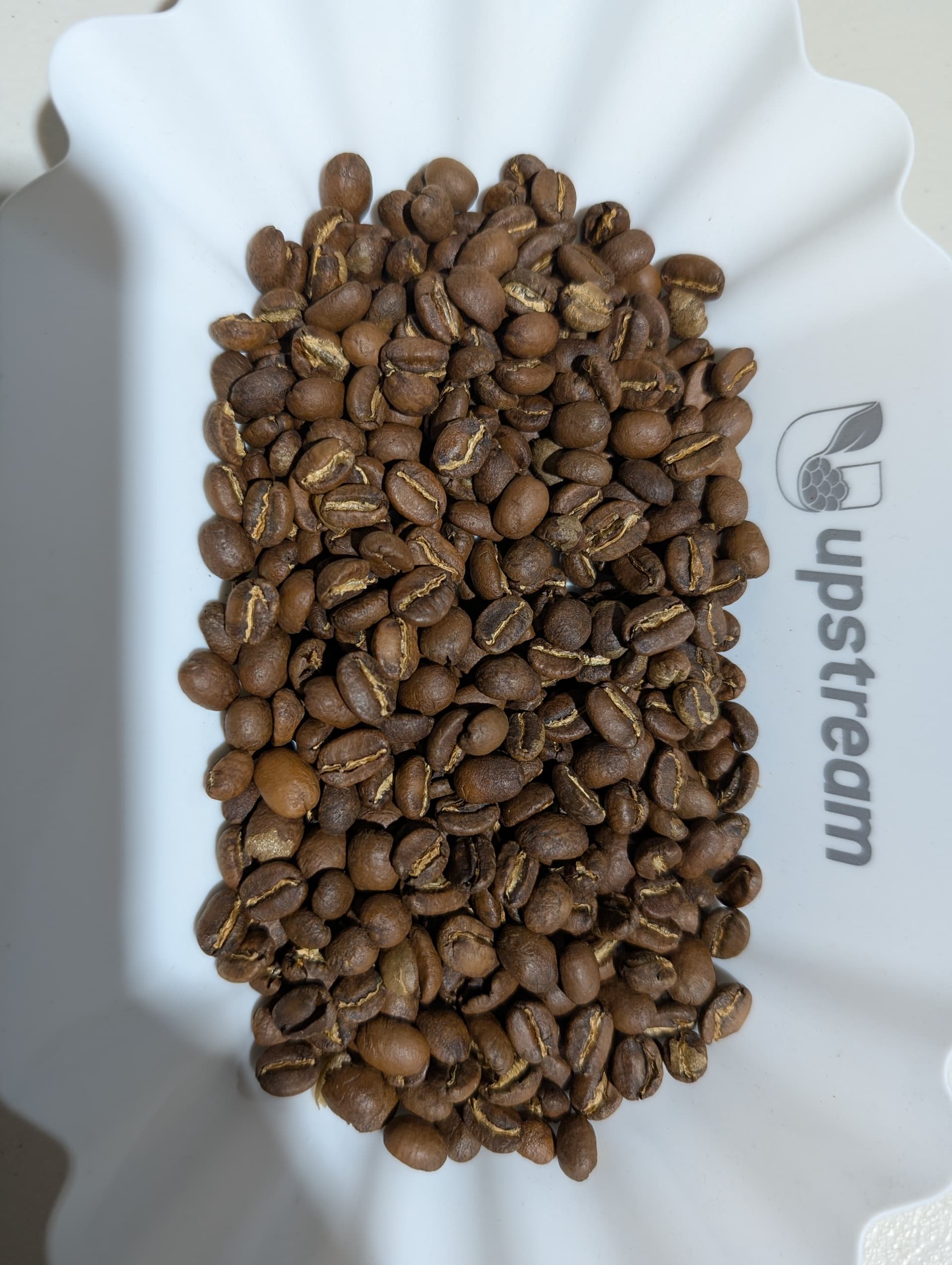
Picture of latest roast
I’m finding it difficult to tell between mottled beans because the roast is light, and scorching / facing. I can’t see any scorching after charge or during drying. I’m not sure if some beans that look darker on the face in Miallard are scorched or faced. My airflow seems sufficient for a 350g roast, so I don’t think the chaff is burning or too much smoke is in the roaster.
Any help would be much appreciated. I just want to drink my own delicious filter roasts again instead of throwing them in the bin.
1 Like
I have to ask if you have these problems on your normal roasts or just the last one? If it’s just that one, nobody can be of any help as this is something you’ll have to diagnose and fix. If this is happening after you’ve cleaned the IBTS, and it should be the other way around because a dirty IBTS will show lower than actual temperatures, you might want to up the PH and be more aggressive. It might seem counter intuitive, but these denser beans might turn out uneven and have some defect if they don’t receive enough heat up front or spend too much time in the roaster. When did you clean your IBTS?
Hi @braca19452f9m I’ve had trouble with this bean and a couple others - a washed Kenyan and honey Costa Rican. All other roasts have been great - Peru Geisha, Costa Rica natural, other washed Ethiopians. When I looked really closely at the latest roast - Eth Yirg, the ends seemed burnt. Not your classic tipping with the black spot, more like a black patch. The roaster cut out with the low voltage / overheating error code 256 twice on that roast. Have you charged higher than 230 for 350g roasts of dense beans and tried anything else like lowering drum speed?
Aillio support are helping me diagnose ERC 256. I’ve tested the roaster on multiple power outlets so it could likely be overheating.
I cleaned the IBTS when I cleaned under the drum and checked the pulley was pushed as far forward as possible. It’s giving the correct temps for yellowing and FC. I don’t rely on it after FC and go by time and colour for development. I’ll use the bean probe for bigger batches as it seems more accurate then.
To be honest, even 230 sounds too much for 350g. So, if you have tried going fast in the beginning and being very gentle at the end, and other beans do just fine, it might be the bean itself. I’ve seen the picture and it does not seem that you’re having tipping or scorching. It looks like you’re facing facing. Sorry, had to write it. This type of defect seems impossible to handle, especially on very dense beans that require a lot of heat. Now, if you lower the drum speed, the beans will have more contact with the drum, which should exacerbate the problem. Not to mention that the roast will be slower, so you’ll have to apply more heat to reach the targets for a specific bean, which means even hotter drum. You may try it, but the theory and practice are what they are. I’ve had beans that, whatever I’ve tried, and I did try everything, would have the facing defect. It might be due to processing and the way chaff clings to the beans. In your photo there’s some chaff still sticking to the beans. The thing that might work is having the fan run very high since the very beginning, but that also requires upping the PH and the applied heat during roast. You might want to try something with f5 from the start, and maybe even raise it towards the end. In theory, it might work, but the practice proved a little bit sketchy for certain beans. Also, you’ve said that you roast in a well ventilated, almost open, space. That might mess with the airflow inside the Bullet, if the draft is noticeable, hence resulting in roasting defects. That’s all that comes to mind. Good luck.
1 Like
Howdy, and thanks for sharing.
I’m curious to see if you’ve tried anything that has worked I hope you update soon on your results.
I have been roasting some particularly small dense beans from a friend’s farm in Ecuador, so needless to say I feel the pressure to roast these beans perfectly every time. This being said they are very difficult to roast because of the attributes mentioned, it’s very easy to come up with underdeveloped or burnt beans.
Personally I would rather burn them then bake them, a little under development inside, and scorching/tipping bothers me less than baking away all the good stuff, so my roast goals tend to aim for higher temperatures and less time. That being said I believe I found your roast curves and your charge temperatures seem ok, power could be higher for longer in the beggining. I shoot for very high temps untill turning point then lower power depending on how fast the beans yellow. Admittedly I don’t play very much with the fan.
I recently saw a Probat sample roaster for the first time, it was a single barrel one, and the thing was ancient. The grader that used it for sample roasting loved it and said it was the best for sample roasting, specifically because it didn’t have a lot of settings to tinker with. A simple approach can be easier to manage. If I was in your shoes I would reduce the amout of variables in the roast as much as possible. If you’re willing, come up with a plan that will yield great results or go wrong for a specific reason. In my case if my roasts come out bad I need to reduce power, if they still come out bad I will add a little fan, and I have not had bad results 3 times in a row so I will report back when that happens haha.
Specifically in your case, assuming outside variables aren’t the ones impacting your roasts, I would carry 8 power from start to turning point and then go to 5-6 power till development time, and if you’re carrying good momentum throughout FC then lower it another level once FC is in full swing. If you’re hitting yellow around 4 min I would say you’re well on the way to hit FC with good momentum. As far as the fan, personally I don’t use more than fan 3 unless I’m carrying too much power and need to slow the roast down. This is what works for me, your approach could be different but the fact remains that simplicity is your friend and will help you troubleshoot
Good Luck!
1 Like