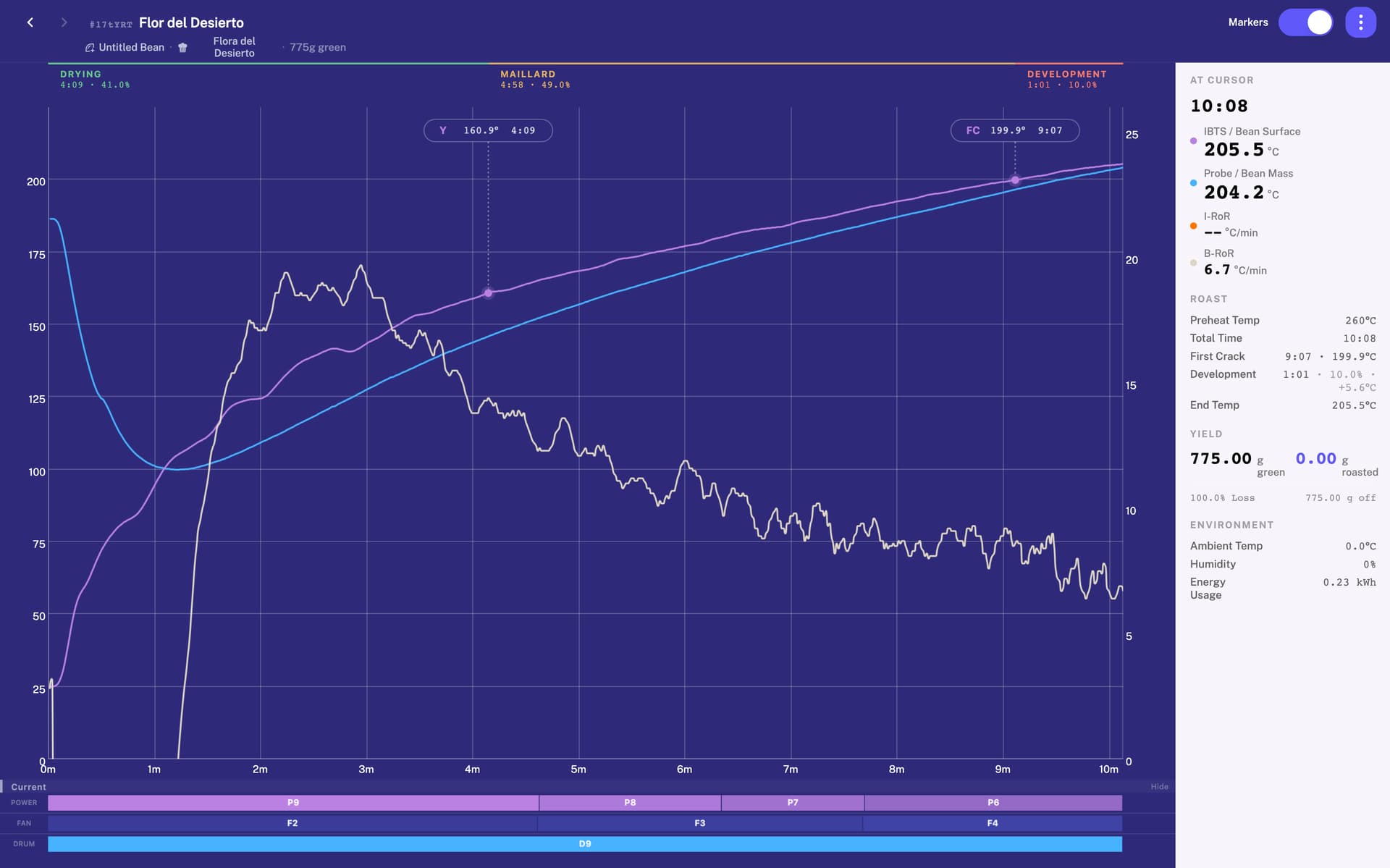
Got a brand new bean to roast – a Colombia natural that is hopefully very promising. I was doing some test roasts today and my second roast had a really nice RoR curve. I’ll be cupping it after it rests for a day or two to see how it tastes but it got me thinking about Maillard. I roast almost exclusively natural beans and rarely take them past 10% development time to keep them light and bright. I’ve been reading up on Maillard as a result of observing that the majority of my light roasts end up with around a 4-5min phase. It’s my understanding that this extended Maillard is actually working against me trying to keep juicy brightness and instead bringing out caramel, toffee, sugar, etc notes. I’m already only PH @ 260* for a 775g batch and when I’ve tried to drop the PH temp even lower I end up with roasts in the 12-13min range instead of the 10-11:30min range and feel like they end up a but muted and baked.
From what I’ve been reading it sounds like shooting for a 2-3min Maillard phase would be ideal for the types of beans I enjoy most but I’m trying to figure out how to accomplish this or if it’s even something worth pursuing at all. What have you all been trying to accomplish in your roast profiles when it comes to the Maillard phase?
1 Like
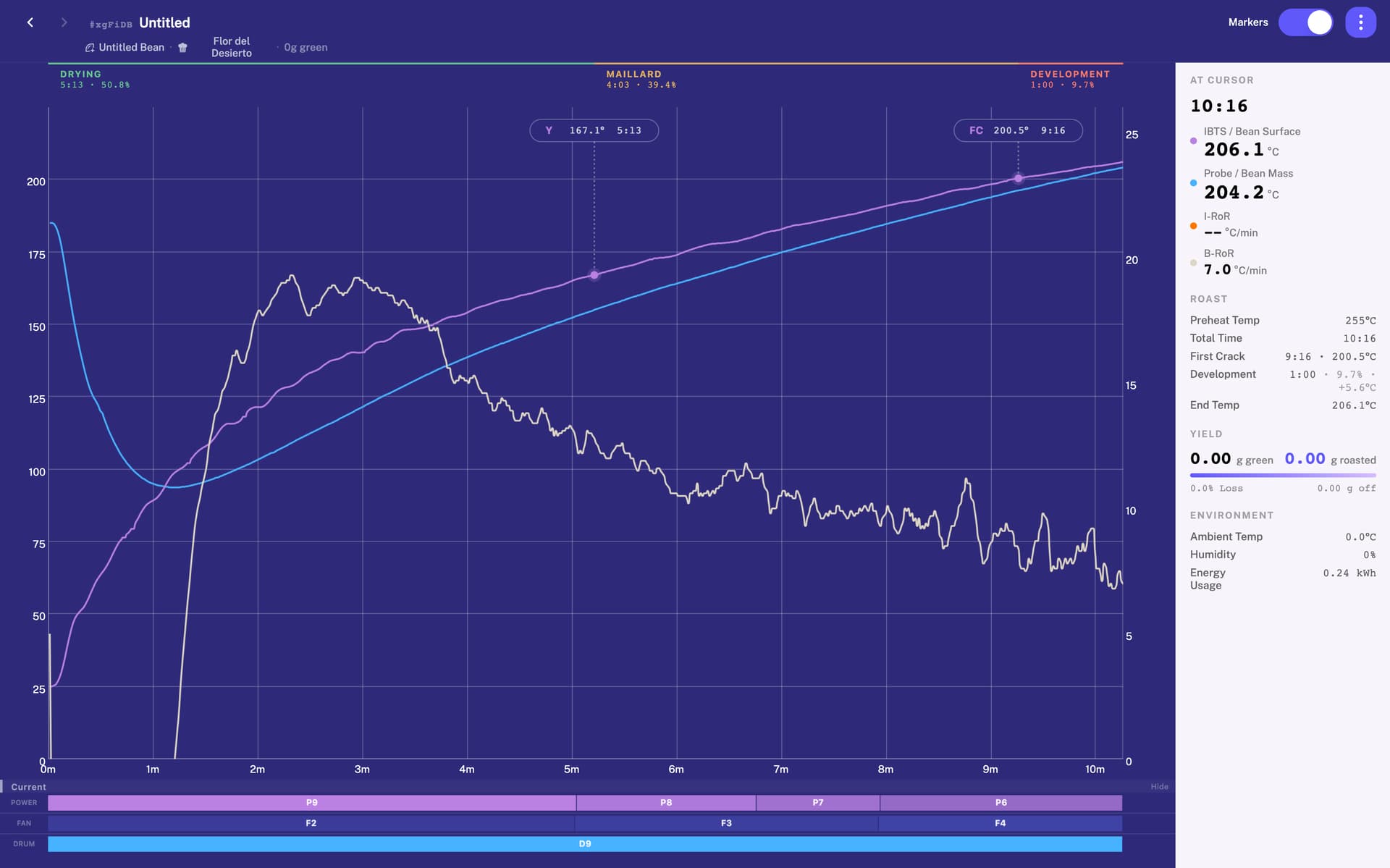
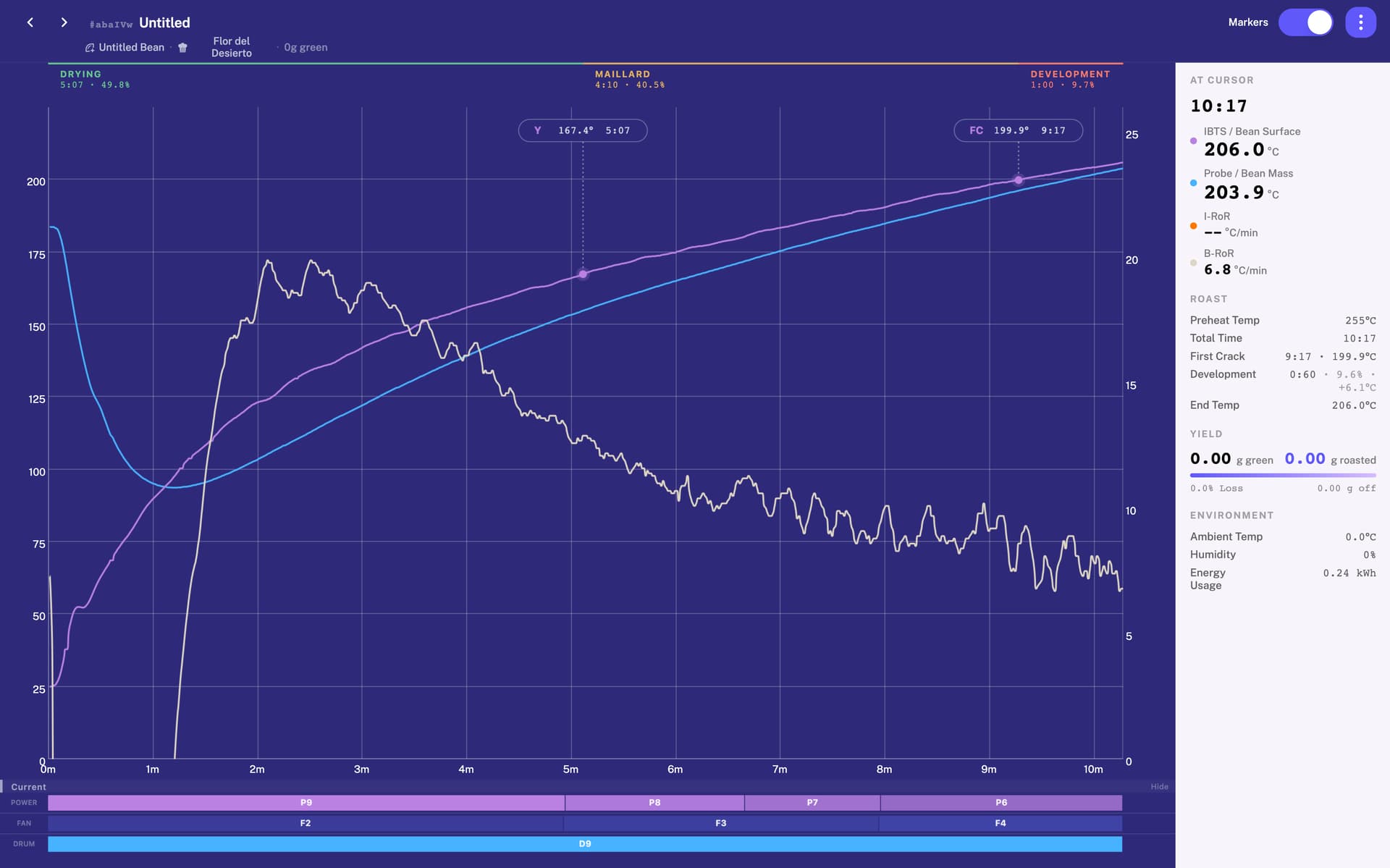
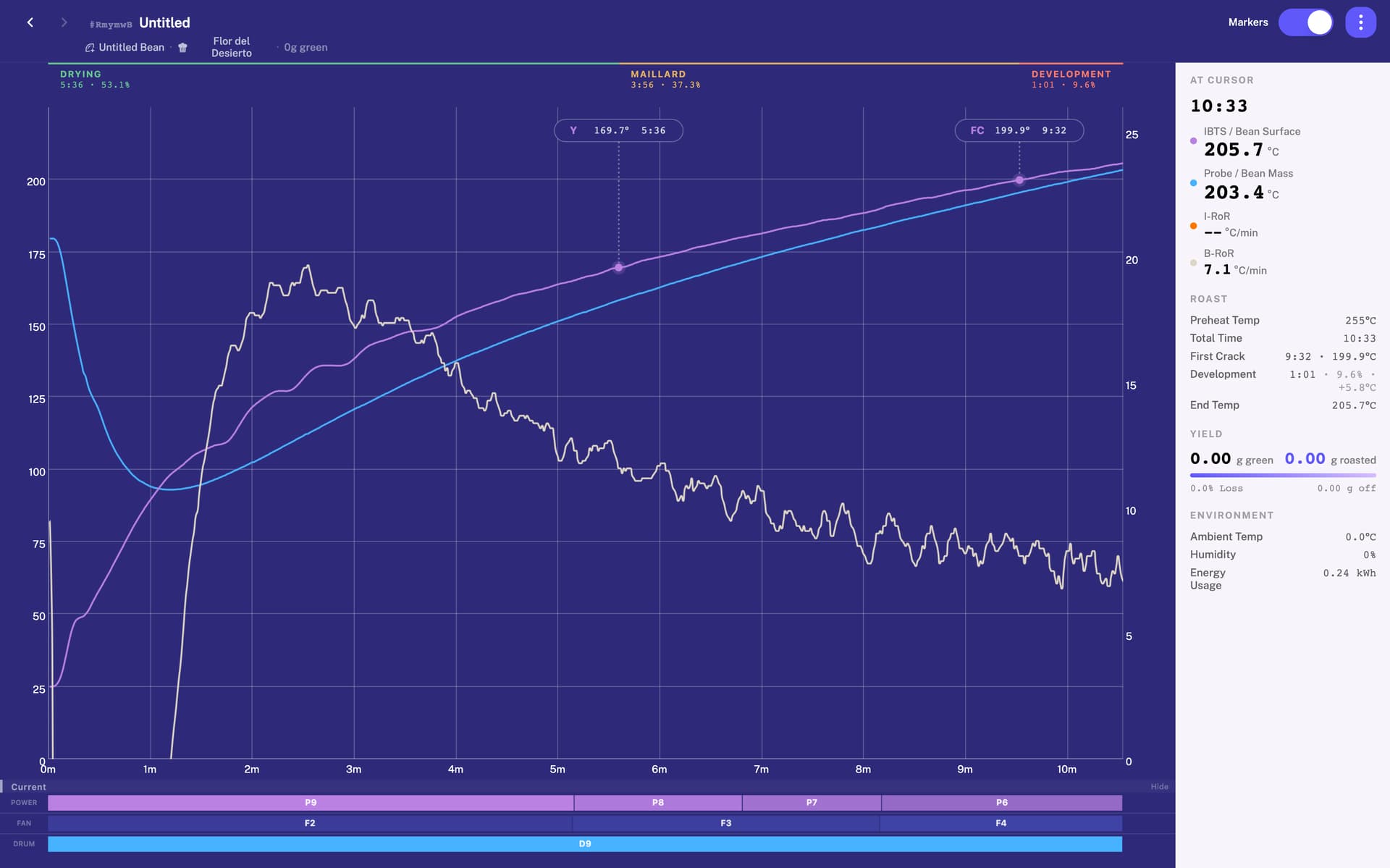
Here’s another couple of roasts from this morning. Similar in terms of steady RoR decline even with reducing PH temp to 255*C. Good looking times, temps, and everything at least with what I’m used to seeing and usually satisfied by re: what ends up in my cup. I’m still trying to figure out if/how its possible to reduce Maillard in the Bullet. I thought maybe reducing PH temp would slow the beginning of the roast and extend drying phase but it really didn’t do much. Maybe I’m marking Yellowing too early? but even then it would only buy me a few % anyway. Have any of you played around with either shortening or stretching Maillard in your roasts?
I probably have less experience in roasting than most on here but if I had to give my two cents after looking at your roast curves I would say that the fan adjustment up after yellow is stretching your Maillard. Brightness, acidity and fruitiness do not require long roasts to develop in fact those volatile notes will be lost or muted on longer roasts.
I would not use F3 until the very end of the roast, maybe just before first crack, I would also stick with a higher charge temp rather than a lower one, keep stronger power to reach turning point at or before 1 min, and lastly I would try to to limit power changes to 1 maybe two changes.
Charge temp at 260 seems good, but hit it with highest power setting until you reach turning point or until you’re about to get to desired peek ROR, then try to find the correct power setting to coast through drying and maillard without having to make adjustments, keep fan at 1 until FC is about to happen or as it’s happening.
I think the fan is taking away the heat you need to make it across maillard faster, and having higher power in the beggining is going to help you carry through without roasting defects.
Keep pulling out your trier to make sure you’re not getting roast defects, if you have tipping early on it’s a sign you’re going too hard, but again if you take a high power upfront and find a lower power to coast through without changing the fan setting I believe you’ll find success.
Good Luck!
I’ll be excited to hear when you’ve found your solution to this!
I’m sure
Appreciate your reply!
Increasing fan speed is certainly a possibility with everything you’re mentioning. The reason I never drop below F2 is because I don’t think at 775g F1 will sufficiently move smoke and chaff out of the Bullet’s exhaust but I could definitely be wrong about that.
Interesting idea about a higher charge temp. I suppose my mind was thinking – if I lower charge temp it will elongate drying phase and subsequently shorten Maillard. But if I’m understanding you correctly, increasing charge temp will increase overall roast time and subsequently shorten both drying and Maillard? Is that right?
An interesting thing to note about that is I actually reduced my charge temps from 270-280C down to 260 to see if it made any kind of difference with overall roast times but it actually didn’t I can go back through the history of roasts and the difference in charge temps and overall roast time is pretty negligible maybe ~30 to 45sec.
In general, I’ve found the Bullet to be REALLY consistent with batch sizes. Outside of crazy adjustments a 775g batch of washed, anaerobic, co-ferment, natural, whatever kinds of beans tend to roast in about the same amount of time while minor differences in P and F adjustments keep things smoother or rougher on the RoR.
1 Like
Hi!
One thing I would be careful about is treating the time between Yellowing and first crack as if it directly represents the amount of Maillard reaction taking place.
Yellowing, first crack, and the phases we divide a roast into are useful for describing a roast, but the chemical reactions inside the bean do not begin and end exactly at those markers.
So personally, I wouldn’t try to shorten “Maillard” to 2–3 minutes simply because I want more brightness. If a 4–5 minute period is giving you a juicy and bright cup, I don’t think that number itself is necessarily a problem.
I prefer to let the RoR and heat progression guide the roast and treat the phase times more as the result of those decisions rather than targets I need to hit.
Best regards
1 Like
Hi,
I would be careful about increasing the preheat temperature. If the initial/previous heat exceeds what the coffee can handle, it can make a later RoR crash much more likely.
In the way I think about roasting, this can break what I call the moisture chain between the different layers of the bean. Once that continuity is disrupted, it becomes much harder for heat to keep moving effectively into the inner layers.
Best regards
1 Like
That’s what this community is about, sharing our experience and refining the craft!
That is true, the fan does help clear out smoke and chaff, but we also have to keep in mind when the smoke and chaff becomes an issue. From what I understand it happens during FC and development. As far as perceptible smokyness, I have only found that note in coffee that I have roasted well into meduim dark territories.
I have been trying to do the exact opposite and dry faster and extend maillard, but I have found that they stay fairly similar unless I do something drastic, and drastic things have not reflected well in the cup for me.
@cafe.natureve
You’re so eloquent when you write, you really have a gift. How do you feel about the approach of heavy heat ( less than what would cause tipping or scorching ) in the beggining and then a single power till the end of the roast, and a fan adjustment up at first crack?
1 Like
I have a hard time understanding your graph for whatever reason, but for reference I have stayed below 50 F in my Ror I believe it’s 10 C. I usually hit my turning point under a minute, yellowing at around 4 min and FC at 6:30-7 min mark. I also stay under 10 minutes on my roast times, even when I roasted a kilo, but I did get some scorching on that and will be taking more time with that in the future.
What size batches are you roasting and what is your charge temp to hit those markers?
Thanks for jumping into the conversation! The complexity of coffee demands simplicity to try and comprehend what those little greens are doing inside the roaster  but yes, agreed, those phases are arbitrary, helpful, but not rigid and definitive for sure.
I also tend to lean toward RoR and heat progression guide my roasting but after roasting for so long and many hundreds of lbs of beans I’m always trying to grow in my understanding of roasting and see if I can try new techniques or make new adjustments to continue to hone the craft.
my 500g batches have been charged at 482 F (250) and my Kilo batches have been charged at 572 F ( 300 C ). Looking back at your post I think you had the right temp at 265 C. I run max power till turning point
Have you roasted anything with some of the changes yet?
I’m curious to see what you changed and how it translated to the cup
FWIW everyone’s advice is good, but my bullet can do a short, fast roast only for a smaller batch size. With a large batch it just doesn’t keep enough momentum to have a short mallard phase or whatever you want to call it.
But I’ve had a lot of accidental success when I use a smaller batch size than I usually do for the preheat settings.
It can go incredibly fast with a 1 lb or less batch size with a relatively higher preheat. And as others suggested, increasing fan speed helps a lot of with tipping and scorching. You’ll have to experiment to figure out the best settings, but if that’s your goal I think it’s the only way to get there.
No not yet, I’ll probably get to testing some differences out next week.
Yup - this is what I was referring to when I said that in general, I’ve found the Bullet to be REALLY consistent with larger batch sizes and major adjustments don’t seem to make much of a difference.
That’s what I’ve found too. I don’t think there is much you can change on large batches, they kind of do their own thing.
If you roast a small batch size it really lets you speed up or slow down the different parts of the roast, on demand, if that’s what you want. Especially if you do a batch that is 350g or less.
Hi!
I generally believe the beginning of the roast should carry the highest power, because that is when the beans still contain the most moisture.
However, I don’t think controlling the RoR with power alone or airflow alone is the best approach. The two need to work together.
Exactly how you coordinate power and airflow is where each roaster develops their own know-how and preference.
Best regards
1 Like
Quick update: these beans needed rest not roast adjustments apparently.
after resting for at least a couple of weeks these beans are really starting to shine in the cup. the citric tartness and bright fruits really come through as the cup cools with the finish on the palate reminding me of bakers chocolate = not sweet but a soft cocoa palate cleanser.
I usually see a degradation of punchy flavors in the cup after a couple of weeks but not with this bean apparently. These seem to get brighter with age 
2 Likes