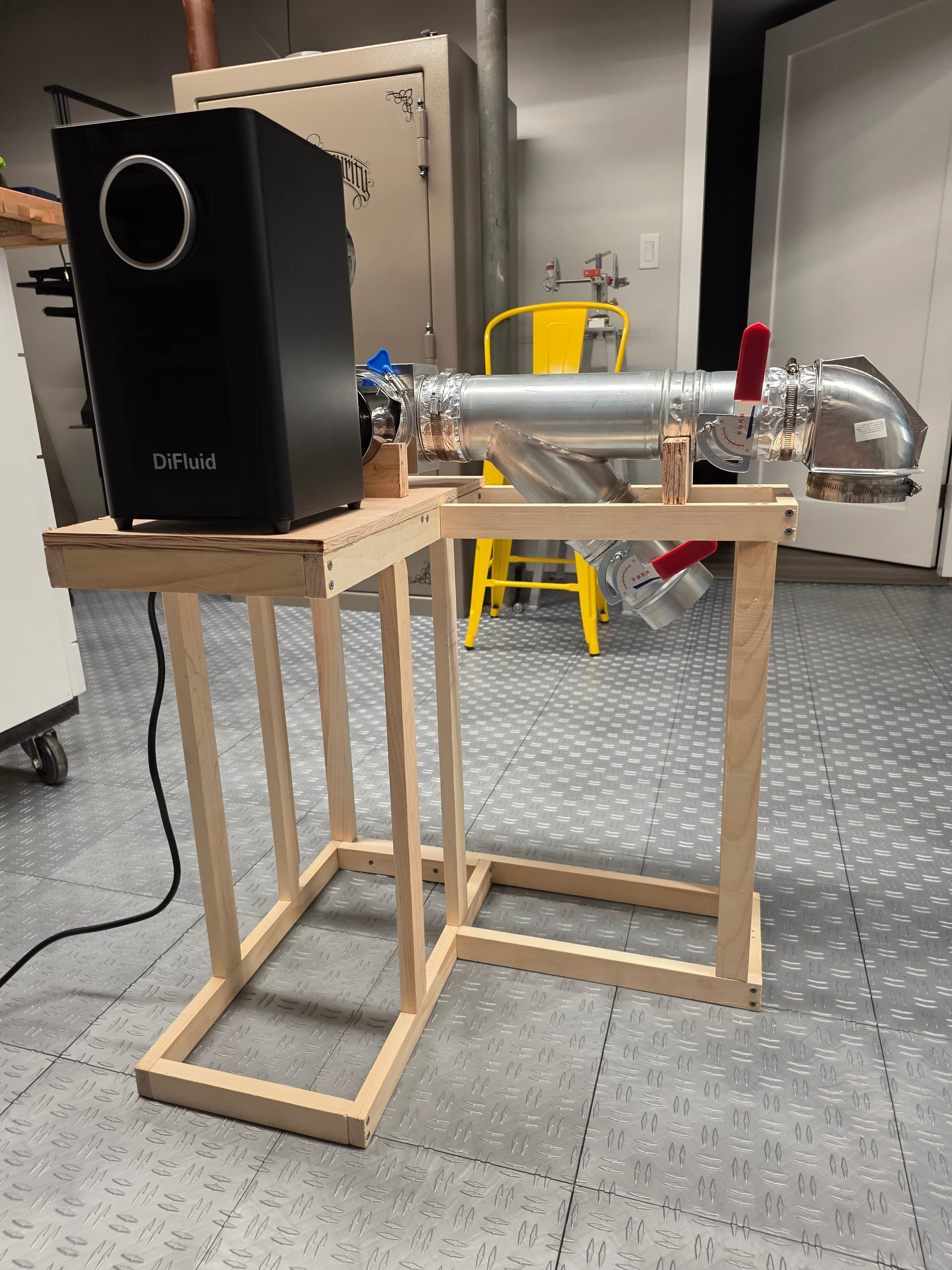
Hello Everyone! So I recently bought and installed a DiFluid Airwave and I thought I’d share my experience and seek out any further advice people might have on my setup.
TLDR: It’s not been straightforward, my experience is that it broadly achieves the elimination of smoke through the external venting but I would question in my experience whether it is really appropriate for roasting 1kg if you’re taking it at all dark (albeit how much of this is the equipment vs. my own venting setup is what I’d like to ask the wisdom of the crowd on!). DiFluid have been reasonably helpful in providing advice to resolve the issues, but overall I would still say my current setup is sub-optimal from an air quality perspective.
Context - I started roasting commercially a couple of months ago on the Bullet R2 Pro, having converted my garage into a roastery. I typically roast 1kg batches and maybe do 7 batches or so in a roasting session. I live in a residential area and while my neighbours are fully supportive I’ve felt like I want to do as much as possible to eliminate external smoke and odour, with the Airwave therefore naturally fitting the bill based on the promotional material. I bought a 220v airwave and then started my various attempts to incorporate it into my setup.
The original setup
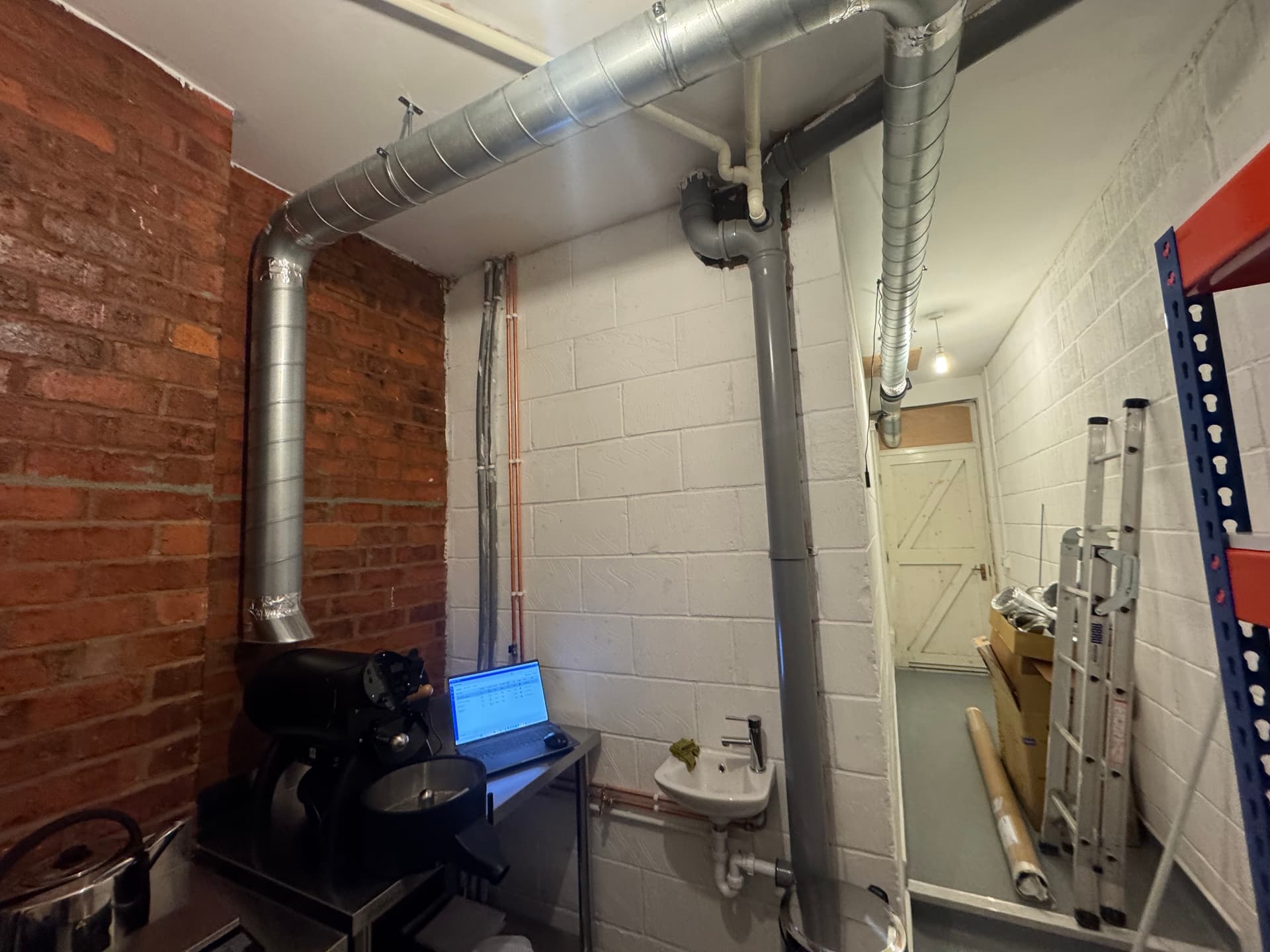
This is how I setup the roastery venting pre-airwave. 150mm rigid spiral ducting being powered by a Cloudline S6 fan. I typically had the fan close to its maximum and my air quality meter (measuring CO2, CO, HCHO, PM etc) stayed in the green on all fronts even when roasting dark. Naturally there was quite a lot of visible smoke and odour outside the back of the garage where the venting exits.
Airwave installation attempt 1
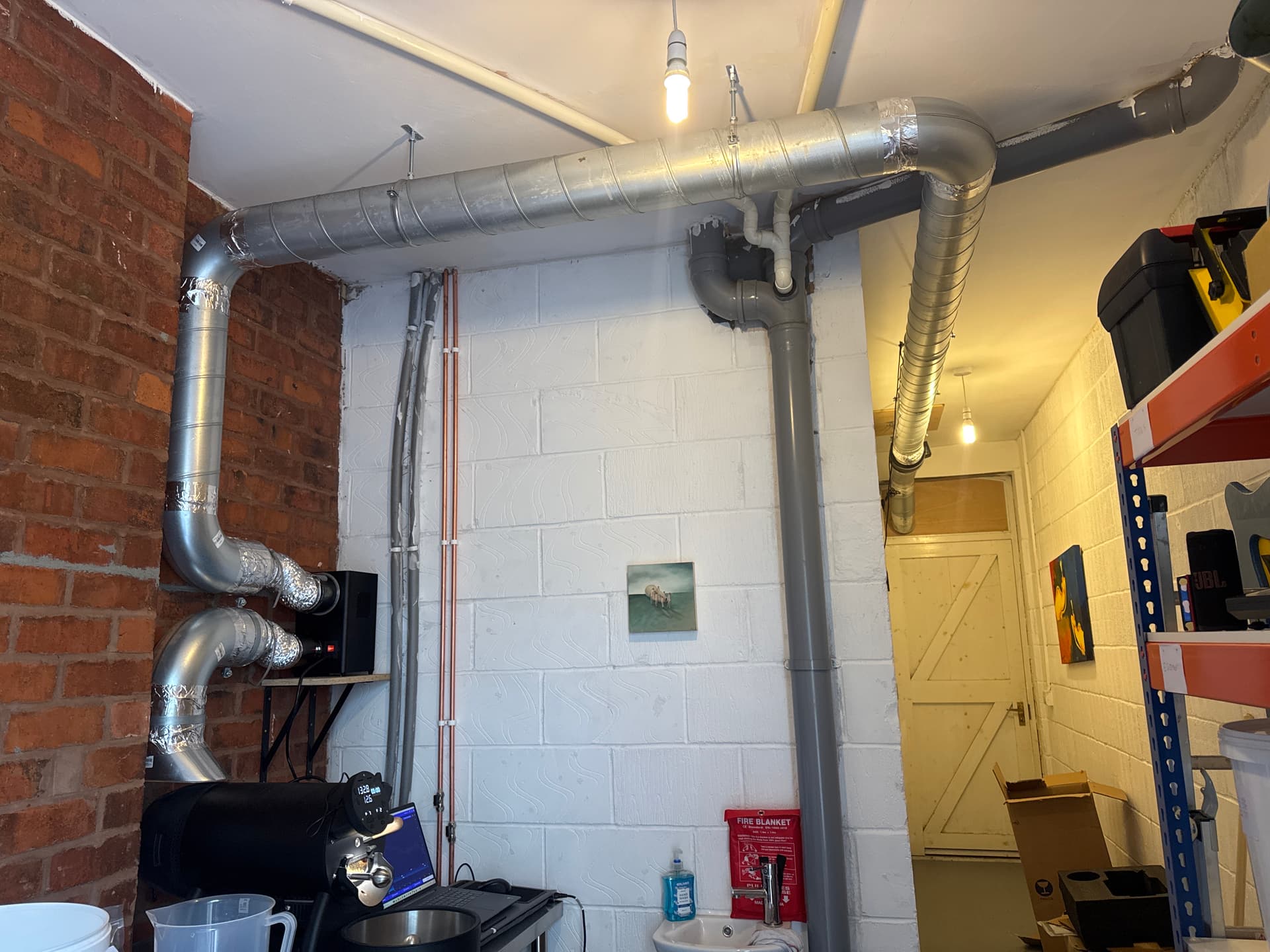
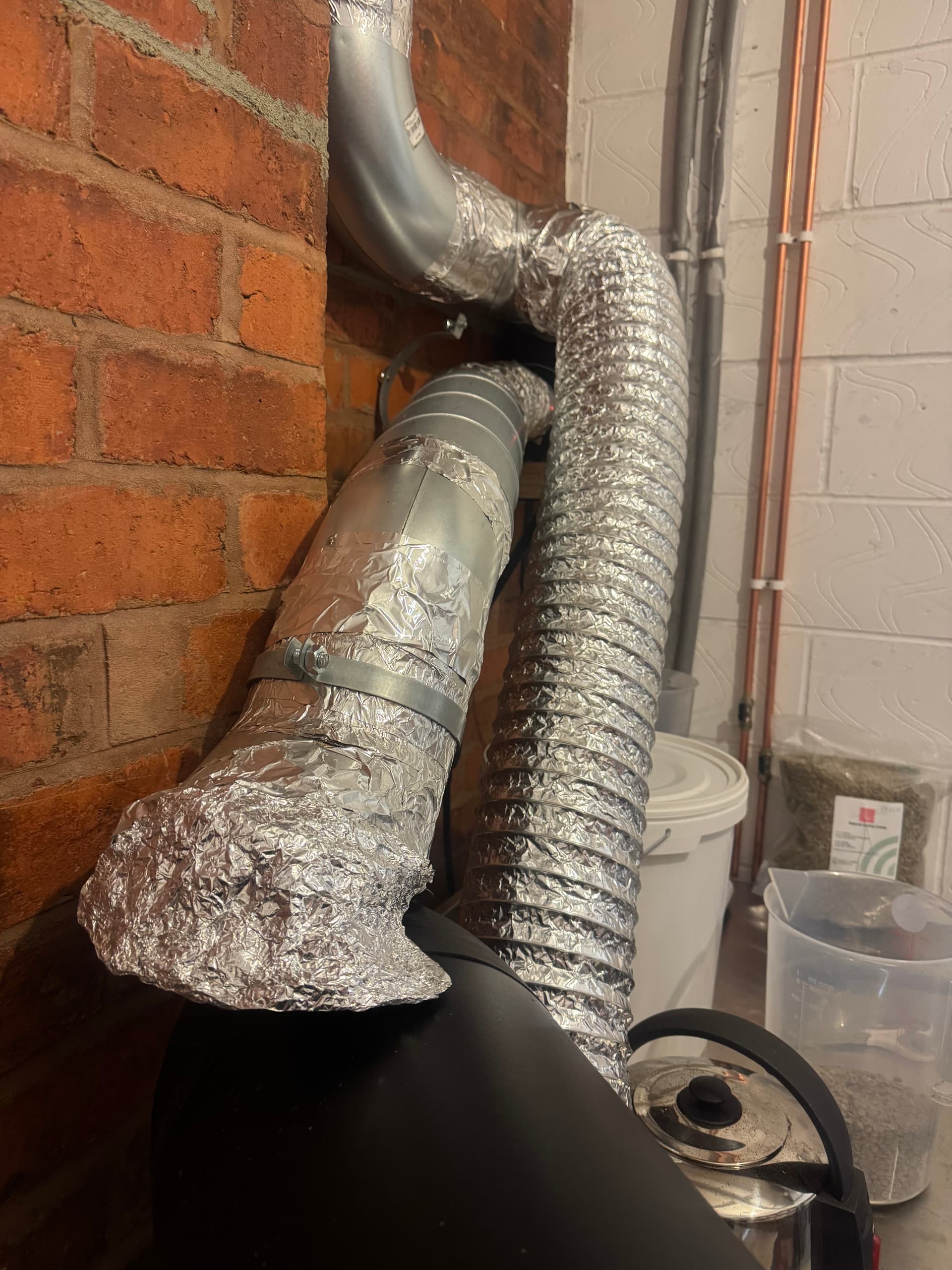
Airwave installed on a shelf just above the roaster. One thing that’s worth noting is that the airwave has only 100mm inlet and outlet which automatically suggests it is designed for moving a much lower quantity of air than the setup I had before. I therefore used a couple of reducers to get from the 150mm setup in my ducting down to the 100mm. Needless to say this setup was a complete failure. Previously, I didn’t need a separate duct going down to the cooling tray as the capacity/draw from the cloudline and positioning of the gather was such that cooling tray smoke at drop would ascend vertically and get gathered. The draw from the Airwave is WAY lower and therefore all the cooling tray smoke was just going into the garage. In addition, there was so much backdraft from this setup that it appeared to cause the Bullet fan to have to work too hard and resulted in an electrical overload/shutdown when the cooling tray fans kicked in. Therefore, I had a very smoky roastery and a roaster that kept shutting down!
Airwave installation attempt 2
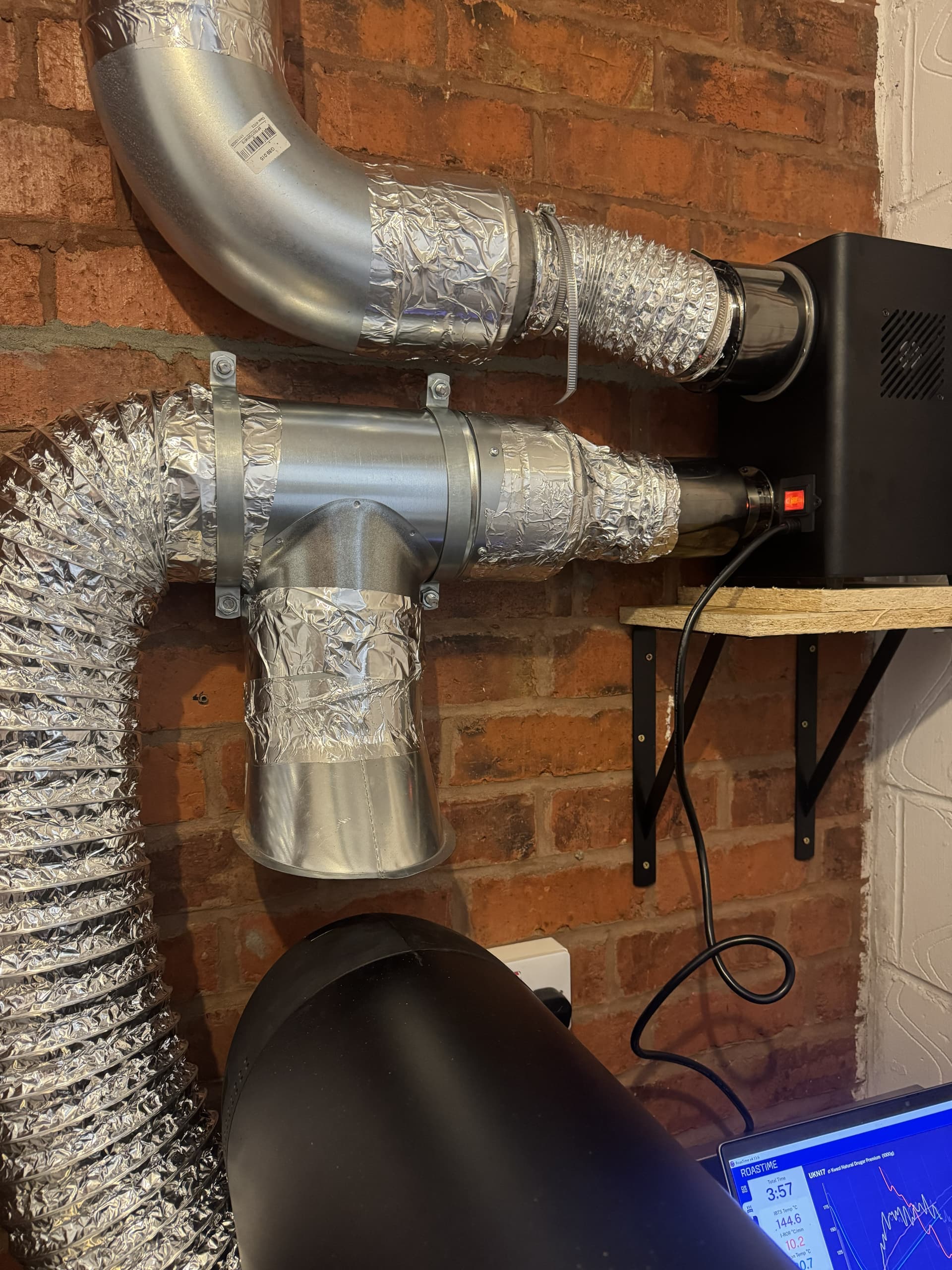
So the first part of this second attempt actually involved changing some of my recipes to have more fan before dropping the beans to attempt to even the smoke volume rather than having so much just coming out in one go. I also added the hose down to the cooling fan to try and capture that (and started roasting with the back door open). While the combination of these things resolved the power overload, the suction just didn’t seem powerful enough to manage the split, combined with my installation of the roaster coming off the junction rather than the straight bit of the “T” which was sub-optimal and Air Quality spiked even worse than in attempt 1…
Airwave installation attempt 3
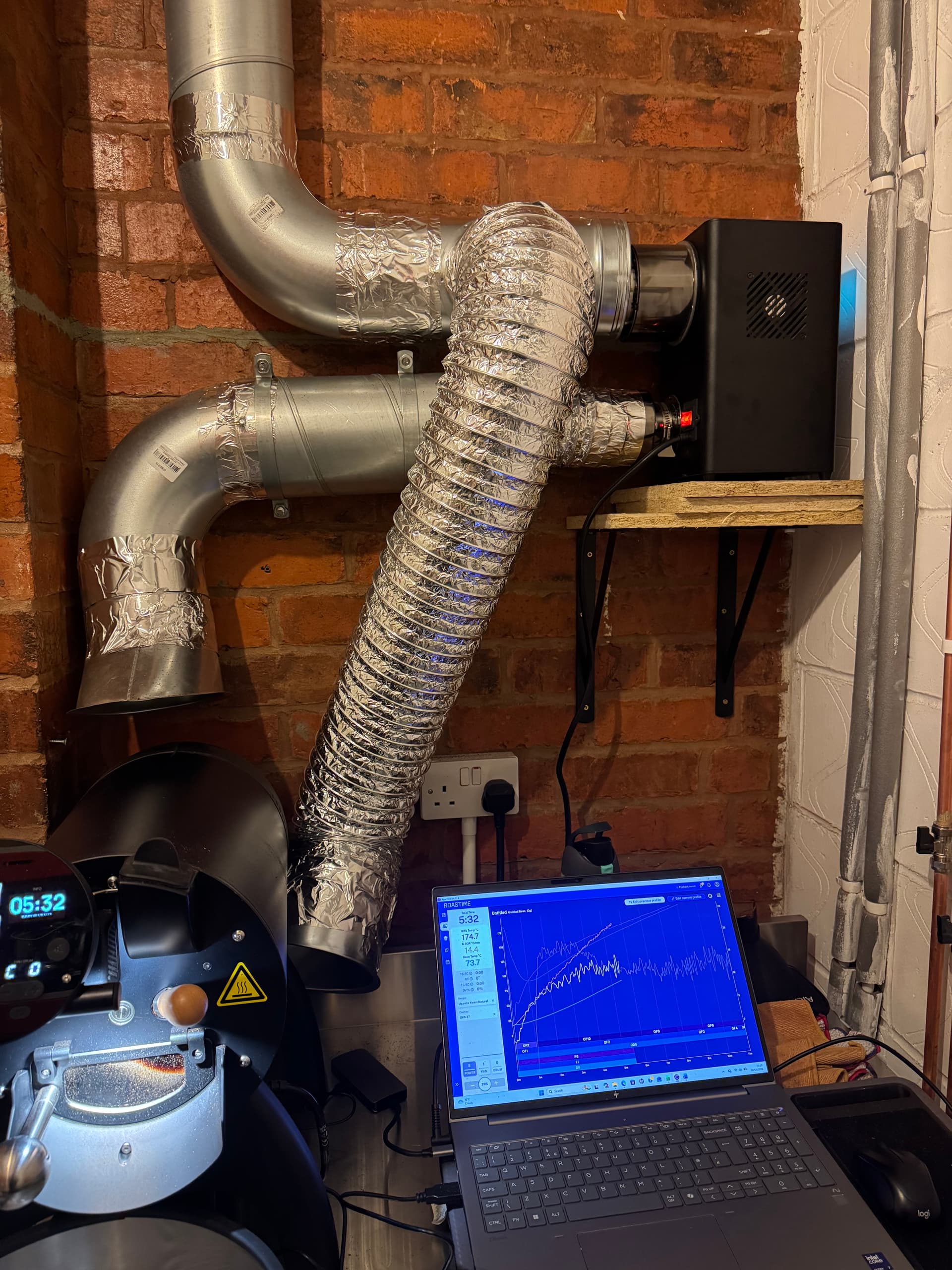
Based on various back and forths with DiFluid, as well as some helpful advice on the setup from Aillio and my own research, I attempted to lengthen the ducting run into the Airwave to provide for more capacity. I also moved the cooling tray run to come straight off the Cloudline and skip out the airwave for smoke coming from the cooling tray given it’s relatively minimal. I’d say this made things better but overall Air Quality, HCHO and PM readings were still very much spiking into the red so I hoped that I could do better.
Airwave installation attempt 4 - current setup
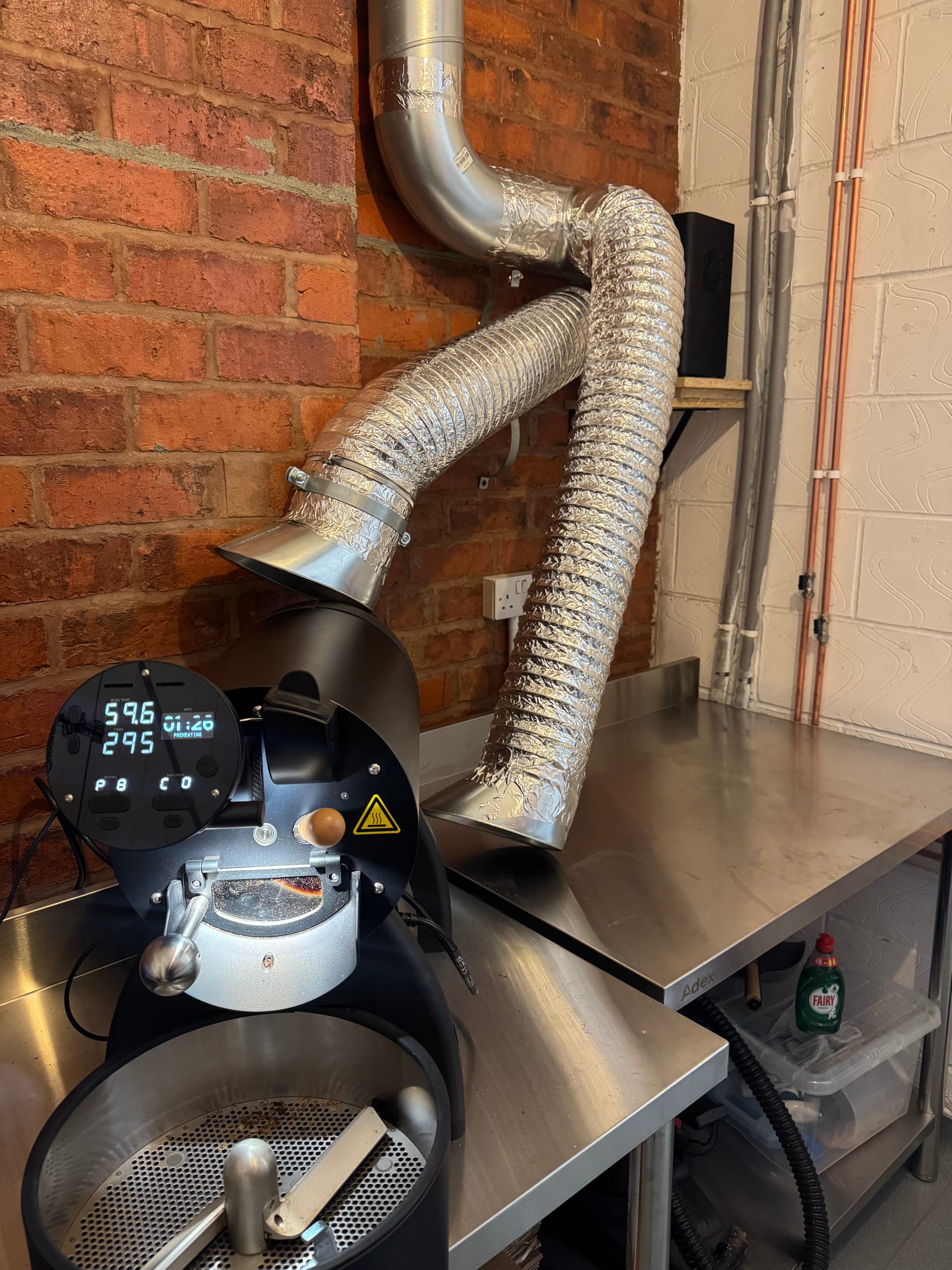
Based on further advice from DiFluid and own research, I have further attempted to lengthen and straighten the run into the airwave, removing the right-angled section which was causing constraint and moving my roaster further away. So far, this is the best of all the setups with Air Quality readings typically showing PM in the Green and HCHO never really spiking above 1.0 mg/m3. There still can be spiked in TVOC above 3.0 mg/m3 for a minute or so before they come back down when I open up the front door of the garage as well as the back to create a cross draft and flush out residual VOCs after the drop, closing the front door again once it stabilises.
Ideally I’d like to continue to improve on this setup to see if there’s any way I can go back to roasting with the doors closed once we get into colder months in particular. I don’t think the Airwave will ever give me the kind of extraction capability I had just using the Cloudline but overall it’s a trade off I’m comfortable with, at least at the moment. I think the next step is to replace the flexible duct going into the Airwave with rigid spiral to further minimise the static pressure and get a bit more efficiency on the intake side.
DiFluid have been reasonably helpful and responsive on trying to resolve the issues, but the challenge is I feel like this is such a new product with likely very few people using it to the capacities that I’m trying to put through it, albeit it is marketed as being suitable for up to 1kg roasts which is what I’m doing!
Massive thread but I hope this is helpful for anyone else looking at the Airwave and any further thoughts and guidance is greatly appreciated!