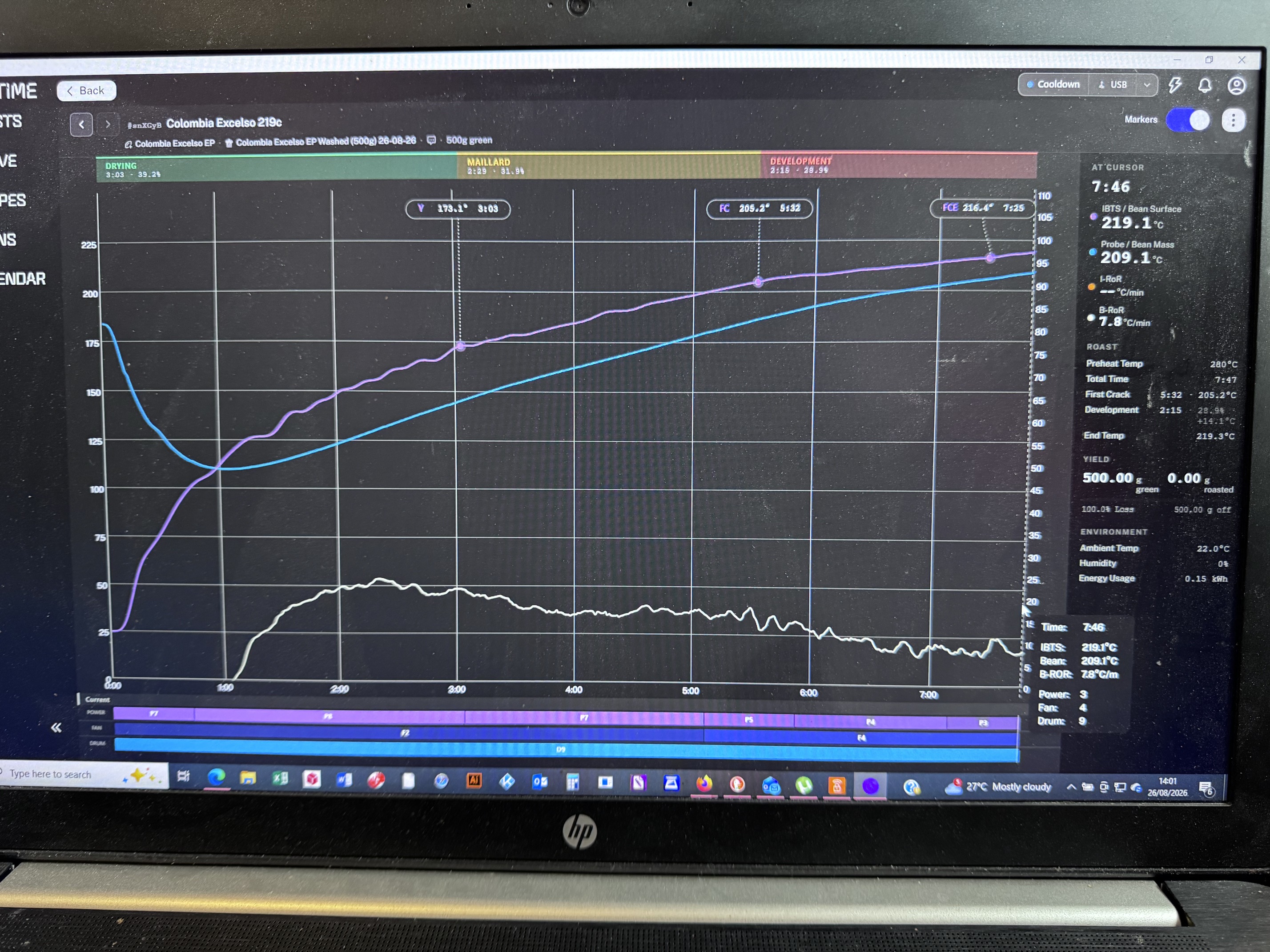
Newbie … looking a tad off colour


Not really sure on how my profile is looking, I’m used to Lavazza barista intenso 9 Italian roasts…. So this roast that ends at 218c before 2nd crack is new to me.

I understand that some of the more complex beans don’t want to be over roasted, or will loose dimensions in flavour

I’m trying to create a high body , with some punchy tones and crema… a modern espresso

1 Like

No one has the perfect answer, mostly because there are so many variables to consider it would take time to figure out every last detail before giving you the correct path towards your goal.

Darker roast can equal higher body, if punchiness is bitterness or roastyness then roasting darker will also achieve that goal. It is also bean dependent, different beans will have different characteristics to bring out.

If punchiness is acidity then you may have to roast a little lighter than you’re used to seeing. One way or another the only way to figure it out in a precise manner is to experiment, roast and cup, and repeat with new variables experiment, cup and roast!

Good Luck!

p.s. Experiment, roast, and cup on repeat!

The Lavazza barista intenso recipe is as follows. Buy cheap coffee, burn it beyond recognition, brew only as espresso and drink piping hot. Your roast is nowhere near that level. You might want to go slower and go to infinity… 2nd crack and beyond.

1 Like

Haha will someone help me with a decent espresso recipe , ok I don’t mind roasting them to the optimal temperature :blush:

1 Like

Sorry, I understand you’re new. I apologize for the joke, and I’ll give you some advice, which might seem basic, but I’m only doing it because I suppose you don’t know any of this. First of all, there’s no such thing as an espresso roast, only color. The color will determine what you have. You can make an espresso with any roast. It will be more challenging making espresso with lighter roasts, since the machines were not designed for making coffee at home, even those home machines are the same miniaturized versions of the big thing, but were made for pumping out beverages in a commercial environment. The only difference between a home and a commercial machine, be it a roaster, a grinder or an espresso machine is the production volume. Second thing, a recipe will not help you. The Bullet is not a machine where you press a button and have good coffee. That would be Kaffelogic nano, or its expensive twin Nucleus Link. My advice is to drop the extremely high preheat from 280C to max 250, although I would even go lower. What this gives you is a more controlled roast, while the 280C on a 500g batch will always run away from you, no matter what coffee you’re using. The recipe you’re using will always give you bad coffee on a 500g batch. You should go to the creator of that particular recipe and ask him for a cup. Don’t blindly trust everything you see. Third, you must wait until the Bullet preheats properly. It will say charge before, but you should leave it for at least 10 minutes after that on the first roast of the day. Your charge temps seem a bit low, but that might be because you’re using an older firmware version. That’s the help I can provide, but I can’t give you a recipe where you push a button and everything goes well, and I would stay away from those that claim they can.

1 Like

Many thanks for your explanation.

So I’ll drop the initial preheat to 240/250 and reevaluate my other parts of the profile.

Is it best to roast say 350g test batches, I understand the profile will require adjusting with different weights. On these lower weights do you reduce drum speed or just maintain 9?

Do you have a sample profile for me to study please, say for a Brazilian natural?

Flying blind here until I find my feet… 🫩

I’m running a Gaggia commercial machine with a Mazzer grinder… so that’s a solid part I’ve been using for years

My Roasts | Roast.World

Here are around 20 roasts of a Brazilian natural. Mind you, not all Brazilian naturals behave the same. You will find differences in profiles because, for me, consistency is the death of everything. I can’t imagine myself doing and tasting the same thing over and over again. Just writing about it bores me to death. But that’s just me and the others do their thing. I’m saying this to tell you that I’ve found that lower PH and a bit longer roast gives the best taste, although the graphs look much nicer on some of the faster roasts. So, never look at graphs, just use your sight, smell and hearing and you’ll be fine. Anyhoo, not one batch tasted bad, just that I’ve found I liked the taste more on the ones mentioned, which might be a subjective personal preference. What I’m saying is that you should look at the profiles as a reference, don’t fixate on replicating them.

Try to keep a consistent batch size, whatever it may be, until you start improving. Of course, 350g would require you to lower the PH temp much more in order to keep the roast from running away from you. I’m telling you to keep a consistent batch size because, once you’ve learnt how to do that, you’ll know a bit more and will have grounds to make the necessary adjustments once you change it.

As for drum speed, I’ve found that it just adds another, in my opinion, unnecessary variable. I always keep it at 9 because lowering it would mean I’d have to apply more heat, but there are people who like it so, once you get the hang of it, you could try. For now, just stick to P and F.

The most important advice is that you should never get discouraged. Anyone can do anything with enough effort invested. You fail until you get it right, and you drink your coffee, however it turned out, as punishment and incentive to learn. You might think this is a joke, but that’s what I did, and I’ve never wasted 1 bean in my entire life. Also very important is that you do not fixate on what I, or anyone else, tells you. Take everything you hear with a grain of salt and develop your own thing.
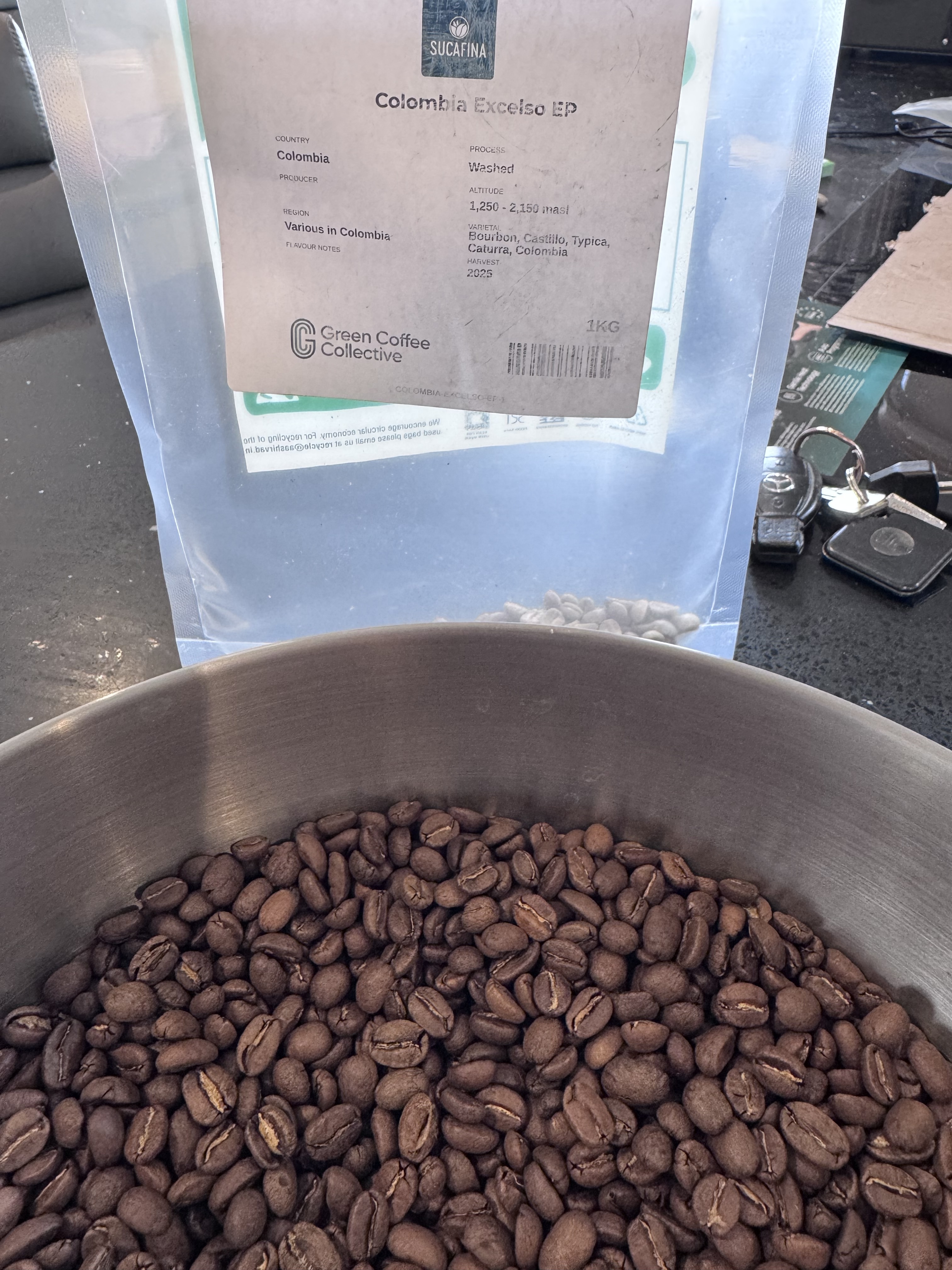
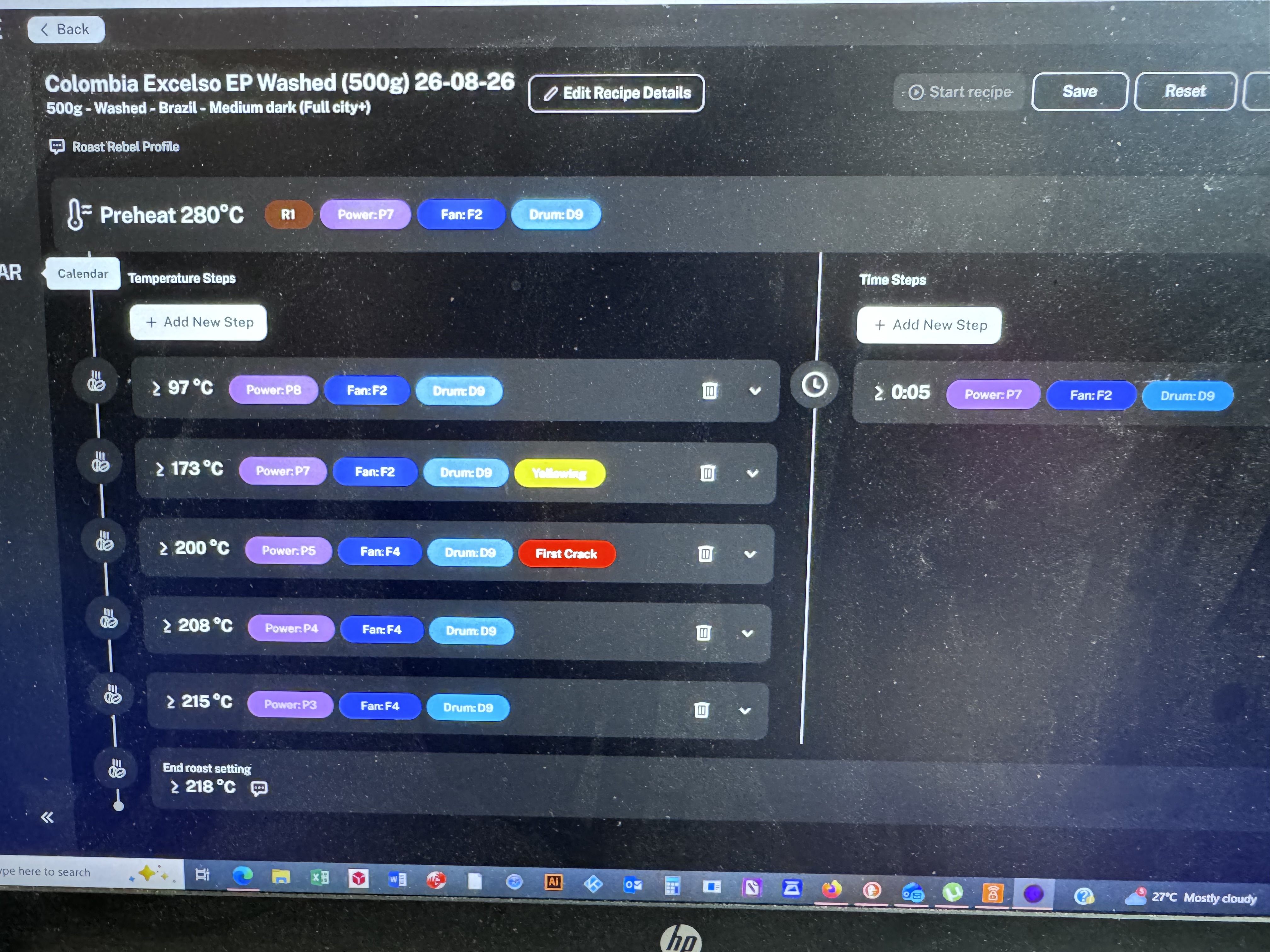
3 Likes